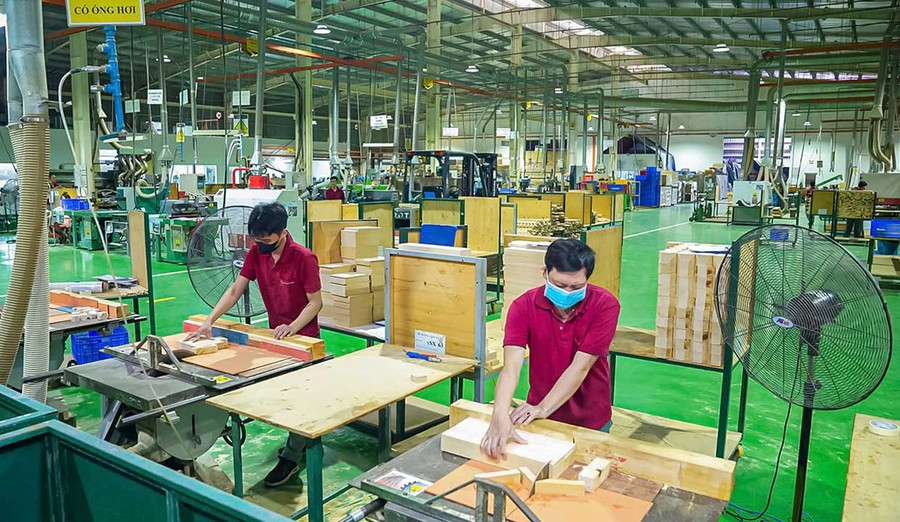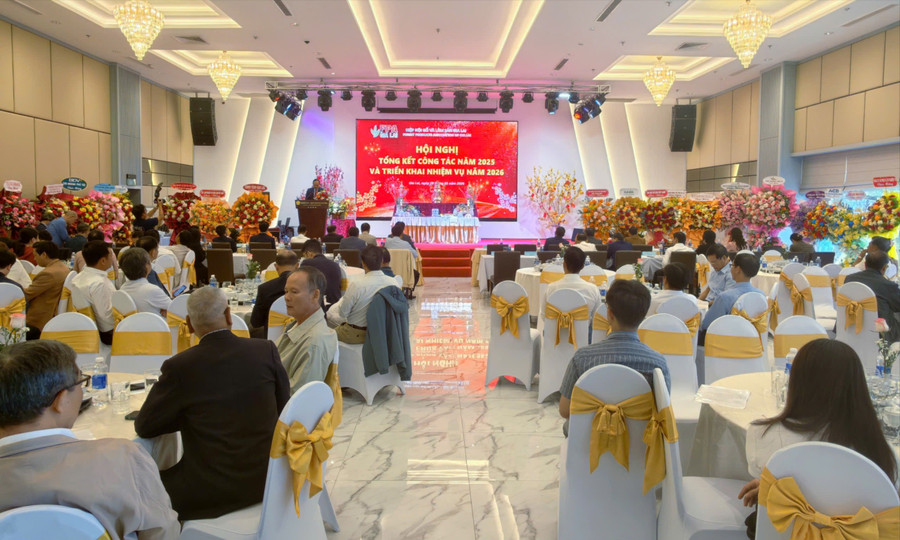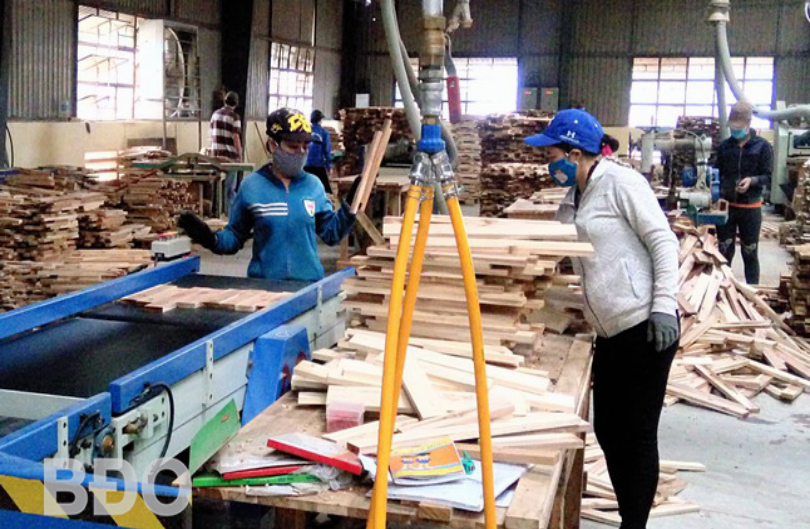
High inflation in key export markets is making things increasingly difficult for wood processing and export businesses in Binh Dinh province as the year draws to a close; orders are decreasing, being canceled, or delayed, and production is operating at a reduced capacity. Although there hasn't been a mass layoff of workers like in some businesses in the South, employees are forced to work in shifts and plan for longer Tet holidays than stipulated to alleviate the pressure of work shortages – a reality that has become inevitable.
It's difficult to find new orders.
According to the Binh Dinh Wood and Forest Products Association, the export value of the wood industry in Binh Dinh province in the first 11 months of 2022 reached US$898 million, an increase of 101% compared to the same period in 2021, accounting for approximately 61% of the province's total export value. Of this, the group of interior and exterior wood products reached US$449.3 million, an increase of nearly 51%; the group of wood products (wood chips, wood pellets) reached US$290.5 million, an increase of 48%; and the group of woven plastic products reached US$158 million, a decrease of 16%. The value of wood imports in the same period reached US$50 million, a decrease of 51% compared to the same period in 2021.
Mr. Le Minh Thien, Chairman of the Binh Dinh Wood and Forest Products Association, said: "This result was achieved mainly in the first and second quarters of 2022. The unprecedentedly severe drop in orders was due to slow consumption and large inventories at supermarkets and warehouses in the US, EU, and UK, while factories in our province had already produced goods based on orders and were only waiting to ship them, thus facing difficulties in warehousing and preserving a very large amount of inventory, delayed payments, and canceled orders... Some factories still have orders until the fourth quarter of 2022, but no businesses have orders for 2023. Many factories have even ceased production since June 2022. This can be considered a record-breaking difficult period for the wood industry.".
Due to a scarcity of orders, many wood processing and export businesses are operating at a reduced capacity. Many factories are accepting significant losses by lowering prices and offering promotions to retain some orders and keep workers employed, but this situation is unlikely to last much longer.
According to representatives of several wood processing businesses in Long My Industrial Park, many companies have recently been working with partners in the US, producing additional samples to find more customers and retain jobs for their workers. However, so far, no company has secured any new orders, and a large amount of inventory remains. One company (which requested anonymity) has announced that it will lay off all its workers from the end of December 2022 and has not specified when they will return to work.
Similarly, a representative from a company in the Nhon Hoa industrial park said that in previous years, the period leading up to Tet (Lunar New Year) was a peak time for overtime work, with exporting 3-4 containers of goods per week being normal. However, now it takes several months to export just 1-2 containers. Due to order difficulties, the company stopped overtime work in August 2022, gave workers Saturdays off in October 2022, and is currently working with the labor union to reach an agreement to temporarily suspend contracts. Currently, the company only has over 160 employees out of a total of 400 workers employed.
Businesses need support from many sides.
In addition to disadvantages in the export market, many businesses are currently facing numerous other difficulties such as: difficulty accessing social insurance support policies; wood industry businesses mainly borrow USD for production and business activities, so when the USD exchange rate rises, it greatly affects their operations; input costs increase due to soaring raw material prices; some new regulations on fire prevention and control are very difficult for small and medium-sized enterprises to comply with due to limited financial capacity; businesses are also being penalized by the electricity sector for not using the full capacity and electricity output committed each month according to the contract…
This December, the Binh Dinh Wood and Forestry Products Association has repeatedly worked with departments, agencies, and banks to find ways to resolve difficulties for its member businesses. The Department of Industry and Trade has investigated the difficulties faced by businesses and directly worked with banks and relevant sectors to find solutions. As a result, commercial banks in the province have ensured credit limits for businesses needing new production loans in the market. Members of the Binh Dinh Wood and Forestry Products Association work directly with banks to find effective solutions; all responses to requests from commercial banks must be reported to the State Bank of Vietnam regarding the results and progress of implementation.
According to Mr. Le Minh Thien, the Association proposed to the Provincial People's Committee and the Department of Industry and Trade several issues: The Government, the Ministry of Finance, and other ministries and agencies should consider continuing the policy of reducing VAT by 21%; the policy of postponing/delaying the application of the new land lease price schedule according to Government Decree No. 96/2019/ND-CP; creating favorable conditions for wood industry businesses and supporting industries to ensure VAT refunds to alleviate cash flow pressure on businesses. The Ministry of Industry and Trade and Vietnam Electricity Group should direct Electricity Corporation 3 to consider supporting the flexible resolution of contract terms, and not imposing contract penalties on businesses that have not used their full capacity and electricity output in the province. The Association also requested the Vietnam Social Security and directed the provincial Social Security to consider allowing wood industry businesses to defer social insurance payments without interest in the third and fourth quarters of 2022 and to implement appropriate policies for employees in wood industry businesses.
HAI YEN (Binh Dinh Newspaper)