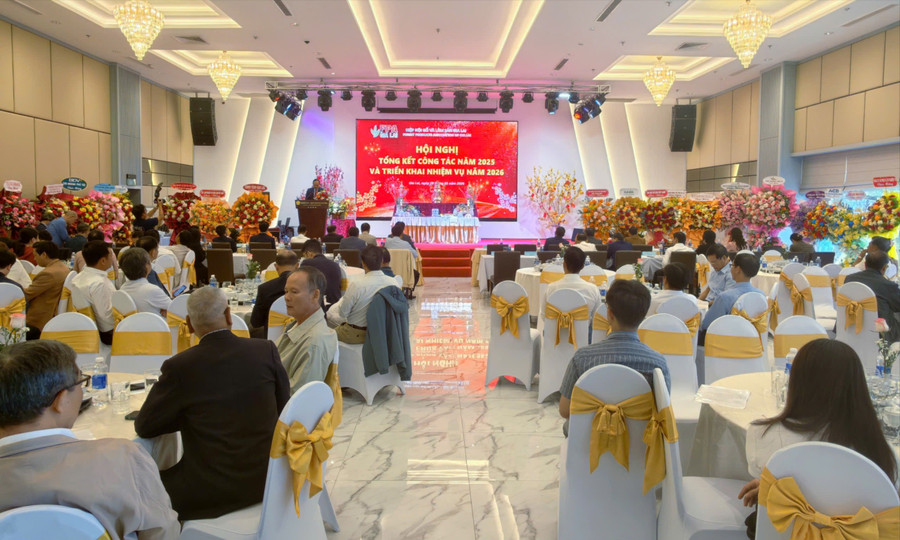
Numerous speakers, including distinguished guests representing government agencies, the private sector, and consultants, presented a range of topics to attendees from 20 countries, with the overarching theme being: “Innovation and Market-Oriented Strategies: Keys to Sustainable Growth.” The Deputy Regional Minister of Sarawak delivered the official address at the Global Timber Conference held in Kuching, Malaysia, in November 2017.
The presentations covered six main themes along with a forum:
• Global timber outlook: demand, supply, and prospects
• Genetics and Good Silvicultural Practices: Determinants for Productivity and Profitability
• Standards, certifications, and eco-labels for the timber and wood products industries: Impacts and benefits for the Asian market.
• Alternative materials to wood for wood-dependent industries: Development potential and prospects
• Changing urban furniture demand; the next wave in the furniture industry; design, materials used, and technology.
• How can ASEAN countries transform their timber industry from order-based production to high value-added products?.
OPENING SPEECH delivered by Deputy Minister YB DATUK AMAR HAJI AWANG TENGAH BIN ALI HASAN, Second Deputy Minister for Urban Development and Natural Resources and Minister for Industrial Development and Entrepreneurship of Sarawak:
“Wood and wood products are important commodities in the global economy. In 2015, based on data from the International Trade Centre (ITC), global trade in wood and wood products reached US$411.27 billion, an increase of 5.71% compared to the 2011 figure of US$389.28 billion. The main products traded globally included furniture products at US$158.86 billion, followed by sawn timber at US$68.27 billion, plywood at US$29.36 billion, and building and furniture (BJC) at US$27.99 billion.”.
Similarly in Malaysia, our exports of timber and wood products reached RM22.1 billion in 2016. This accounted for 17,921 TP3T of total commodity exports and 2,781 TP3T of Malaysia's total exports. The Malaysian Ministry of Plantation Industries and Commodities predicts that with the strengthening US dollar, total timber and wood product exports in 2017 will increase by 51 TP3T, as the United States continues to be Malaysia's largest timber export market.
Sarawak's timber and wood product exports in 2016 totaled RM 5.9 billion, accounting for approximately 271% of Malaysia's total timber exports, a significant figure. The importance of the timber industry in Sarawak is further demonstrated by its employment of 150,000 people, both directly and indirectly.
In Sarawak, the State Government recognizes the importance of sustainable forest management (SFM) in addressing the issues of forest degradation and deforestation that have arisen in several rapidly developing countries. We are also very aware of the need to implement SFM, which directly benefits our people and protects the habitats of our forest areas. However, forest ecosystems are complex and highly affected by external factors. Similarly, different forest types in different regions of the world require different sustainable management strategies. Therefore, we believe that the criteria for sustainable forest management must continuously adapt to new circumstances; they reflect the national situation, specific ecological and environmental conditions, as well as social, economic, political, cultural, and spiritual aspects.
In Malaysia, the Malaysian Timber Certification System (MTCS) is one of 37 systems certified under the Programme for Approved Forest Certification Procedures (PEFC). MTCS is an internationally recognized system, and Malaysia was the first country in the Asia Pacific region to achieve this recognition through its initial five-year accreditation by the PEFC Council in 2009. The MTCS system was also re-accredited in July 2014 for a further five years.
To date, over 4.66 million hectares, or approximately one-third of the country's total permanent protection forests, have been certified under MTCS to provide sustainable timber and wood products. This is equivalent to 9.61 TP3T from 44 million hectares of certified tropical forests worldwide. Recently, MTCS has also been accepted as a sustainable timber certification by the Dutch Government's Procurement Policy. This acceptance marks a significant achievement for Malaysia's timber industry and will undoubtedly open up many opportunities for 'Made in Malaysia' timber and wood products to enter the European Union market.
In this regard, the Sarawak State Government will mandate a phased approach, requiring all timber plantation land concessions in Sarawak to be certified under forest management regulations to enhance sustainable forest management in Sarawak.
The state government has also strengthened the Sarawak Timber Legality Verification System (STLVS) by providing an official standard that includes independent third-party verification to ensure compliance with legal requirements under Sarawak laws and regulations. The full implementation of the STLVS will address the concerns of NGOs regarding the legality of timber and timber products sourced from Sarawak.
My ministry is establishing clear guidelines and is committed to strengthening our enforcement to combat and eliminate illegal logging activities; while ensuring that stakeholders in the industry faithfully implement Sustainable Forest Management practices. We also aim to reduce our reliance on natural forests for raw materials to supply our timber mills. Towards this goal, we are investing in research and development (R&D) and promoting the establishment of a robust and viable industrial forest in the country. Therefore, I believe this conference is a timely and appropriate forum to help members of the timber industry better understand the challenges and strategic initiatives being undertaken to enhance the performance and competitiveness of the timber industry domestically and internationally.“.
Later at the workshop, Mr. Richard Laity, Project and Development Manager for PEFC International Southeast Asia, had the opportunity to present to delegates a comprehensive update on the growth of PEFC in Southeast Asia, where several countries are currently developing national forest certification programs to obtain PEFC accreditation. With 37 countries worldwide having adopted national programs, PEFC is the largest representative, accounting for approximately 601 TP3T of certified forests globally.
The overall speeches included:
“What are the impacts and benefits of TPPA and RCEP on the timber industry in Asia?” Dr. Amalina Ahmad Tajudin, Senior Lecturer, Université Sains Islam Malaysia.
“Assessing the Impact of COP 21 on Natural and Planted Forests in Asia” by Ken Hickson, Founding Chairman and CEO, Sustainable Asia Competence (SASA)
‘"Overview of Sarawak's Forestry and Timber Industry" by Tuan Haji Sapuan Ahmad, Director of the Forestry Department, Sarawak
The following two days covered 'Global Wood Outlook: Demand, Supply and Prospects', 'Genome and Good Silviculture Practices', 'Standards, Certification and Ecolabels', 'Alternative Materials', 'Urban Transformation' and 'The Next Wave for Wood: Design, Materials and Technology'. It was truly an ambitious program.
For the furniture industry, Michael Buckley, a Singapore-based wood industry consultant, offered a quick assessment of the situation and prospects for Asian manufacturers. He concluded that the furniture industry, as always, is facing challenges – with raw material supply and increasing government regulations perhaps being the two most significant. But keeping up with trends is also crucial, particularly through anticipating what buyers will want. In the future, the middle class is likely to focus more on furniture. A recent example is the growing demand for furniture in smaller spaces. He suggested that, when asked why some American and European companies ceased operations, and while many businesses elsewhere would utilize cheaper labor, especially in Asia, improvements in manufacturing and design might be closer to the answer. Finally, online and virtual shopping could become a major challenge for the furniture industry.
“"The OECD predicts that by 2030, the middle class will account for 59% of global spending, concentrated in Asia."”
Roberta Mutti from the Italian consulting firm discussed the success of the Italian furniture industry and focused on the importance of design and the future development of the middle class in Asia. The OECD predicts that by 2030, the middle class will account for 591% of global spending, concentrated in Asia – an increase from the current 231% of global spending.
Sharing a similar perspective on the future, Mr. Ngo Sy Hoai, Deputy Secretary-General of VIFORES from Vietnam, presented two papers on species selection strategies and strategies for the timber industry in Vietnam. He discussed the challenges based on imported timber, low value-added products, and the fragmentation of the timber industry, but he also mentioned Vietnam's achievements in forest restoration, land use rights reform, and market development. In Vietnam, annual timber consumption is 31 million m3, with only 23 million mt available domestically, and with over 100 countries supplying timber, traceability is a significant issue.
Regarding the design and construction of wooden structures, the speakers shared many insights with the delegates about technological advancements and, in particular, the bright prospects for current construction using large-panel plywood (CLT), especially in high-rise buildings.
This conference not only focused on topics related to timber, but also reflected concern for the event coinciding with the official visit to Sarawak by Prince Charles HRH, one of the world's leading environmental activists. During his visit, Prince Charles planted a tree at the Sarawak Biodiversity Centre.