In recent years, although Vietnam's raw timber imports have exceeded $1.5 billion annually, the Vietnamese timber industry needs to implement a comprehensive set of solutions under the pressure of integration.

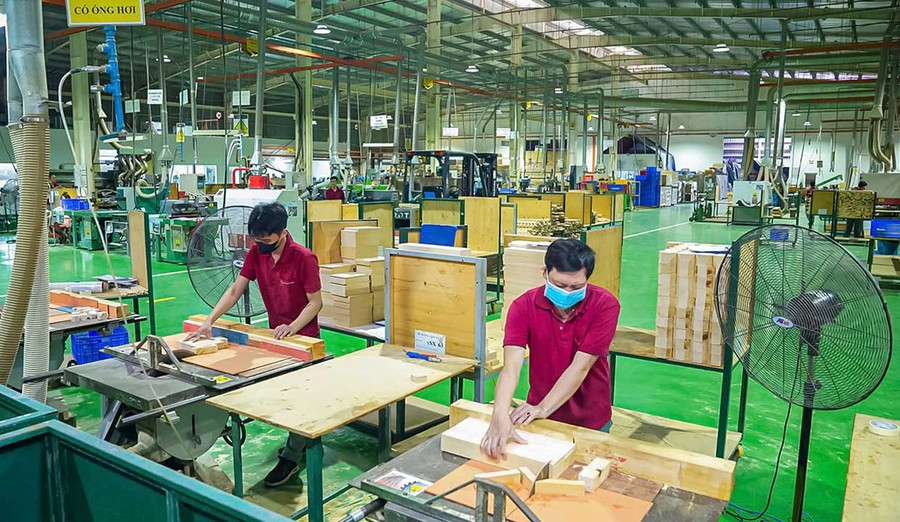
Wood processing for export at SAHABAK Company. Photo: QT
Firstly, the timber industry needs to capitalize on the opportunities arising from the signing and implementation of FTAs. Accordingly, businesses must meet the requirements of importing markets, such as requirements regarding the origin of timber and wood products, and thoroughly understand commitments such as tariffs, technical measures, and safeguard measures to develop effective strategies for entering markets that are signatories to FTAs.
Secondly, it is necessary to adjust the structure of wood export products towards increasing the proportion of value-added products using domestically grown raw materials, developing a harmonious balance between the production of outdoor and indoor furniture, and minimizing the export of raw products. To better meet the increasingly high demands of the market, wood manufacturing and exporting enterprises need to improve designs, quality, technology, and build brands with high-quality products at appropriate prices.
Thirdly, develop and expand the wood export market, and promote trade activities for exported wood products by building promotional programs highlighting Vietnam's position as a country supplying high-quality, finely processed, and practical wood products, especially those using legally sourced and sustainable wood, in major markets. Simultaneously, innovate trade promotion efforts, research and assess market trends, and seek partners to provide maximum support to businesses participating in international and domestic wood trade fairs and forums. Strengthen trade marketing efforts and negotiate technical agreements.
Fourth, strengthen research activities; develop preferential policies for businesses investing in technological innovation, modern and environmentally friendly machinery and equipment. Support training in information technology, and the development and application of FSC, CoC certifications, etc., for processing businesses and forest growers. Develop technical standards to control timber imports into Vietnam; control and prevent the import of low-quality processed wood products into the Vietnamese market.
Fifth, train and improve the quality of the exporter's human resources in terms of knowledge, production technology, management skills, marketing, etc. Organize training programs for production managers/supervisors, sales directors, accountants, designers, and marketing specialists. Organize training programs on wood drying and treatment, and training programs on wood surface finishing. Closely cooperate with suppliers of parts/raw materials (PU, gold plating materials, etc.) to transfer technology…
Source enternews.vn